
Missed phone calls are one of the most underestimated challenges in dentistry. They rarely show up in reports, don’t trigger follow-ups, and often go unnoticed – yet they have a direct impact on practice growth and patient experience.
When a new patient picks up the phone, it matters. They’re often calling because they need help now. If no one answers, they don’t hang around – they call elsewhere.
Over time, these missed moments quietly add up.
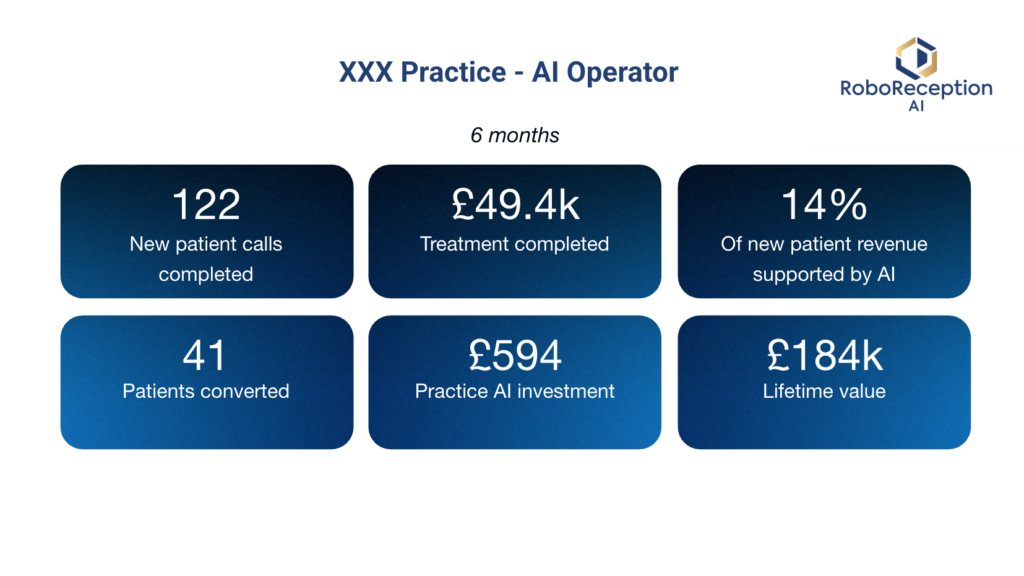
To understand the real impact, it helps to look at real data rather than assumptions. One dental practice using RoboReception AI operator over a six-month period saw 122 new patient calls answered that would otherwise have been at risk of being missed. From those calls, 41 patients converted into treatment, generating £49.4k in completed treatment value within that initial period alone.
What’s particularly striking is that this revenue represented 14% of the practice’s new patient revenue, supported by AI handling calls when the team couldn’t. The total investment in AI over those six months was £594 – a small operational cost compared to the outcomes achieved.
More importantly, dentistry is a long-term relationship. When lifetime value was considered, those patients represented an estimated £184k in future value to the practice.
Missed calls aren’t a reflection of poor reception teams. They’re a symptom of busy practices, peak call times, lunch hours, staff shortages, and growing patient expectations for instant response.
Addressing missed calls isn’t about replacing people – it’s about protecting capacity and ensuring every patient who reaches out is acknowledged.
Because the most expensive calls in dentistry are often the ones no one ever realises were missed.